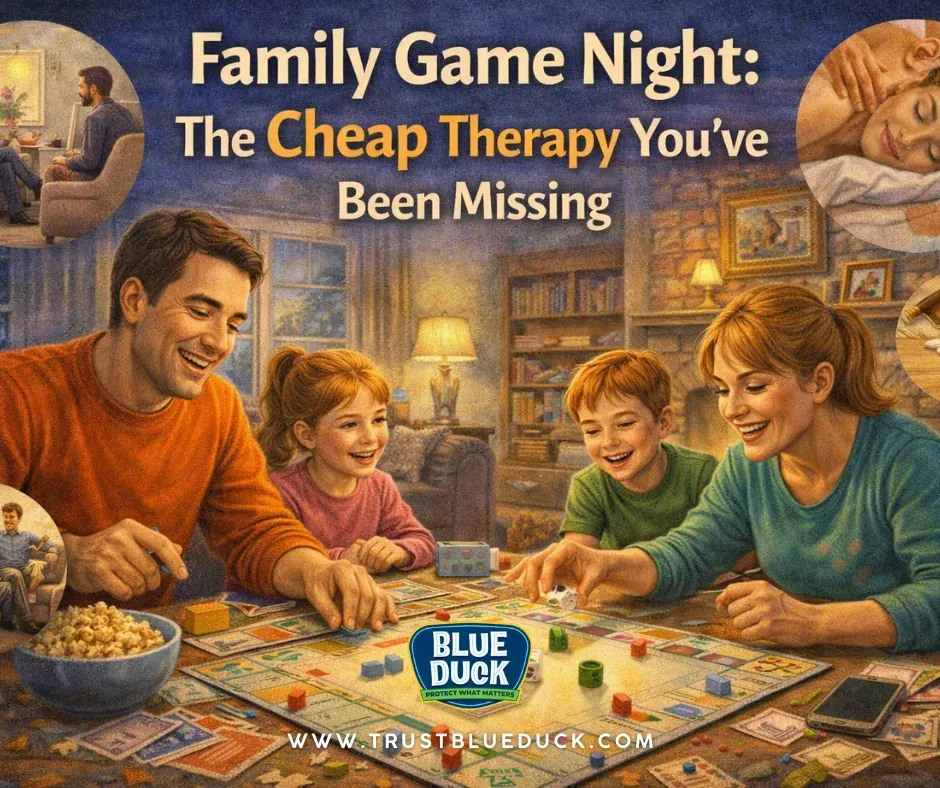
Family Game Night: The Cheap Therapy You've Been Missing
Life pulls families in seventeen directions at once. Finding time where everyone actually connects feels nearly impossible. That dusty box of games in your closet holds more power than you remember. Committing to regular family game night isn't just about killing time on a Friday. It's about creating space where everyone laughs together, competes kindly, and remembers they actually like each other beneath all the daily chaos.
Why Family Game Night Work
Something magical happens around a game board. Screens get set aside. Faces become visible. Conversation flows naturally between turns without feeling forced. Games level the playing field too. A seven year old can beat a forty year old, and watching parents lose gracefully teaches resilience better than any lecture could.
Laughter as Medicine
Notice how much genuine laughter happens during game night. Not polite chuckles, but real belly laughs when someone makes a ridiculous move. That laughter releases oxytocin, literally bonding your family chemically. Stress drops. Defenses lower. For those hours, everyone exists in a bubble of shared fun.
Teaching Without Trying
Games sneakily teach everything schools don't cover. Taking turns patiently. Losing without melting down. Winning without gloating. Thinking strategically. Reading social cues. All this learning happens while everyone thinks they're just having fun.
Simple Family Games That Work
You don't need complicated European board games. Classic options deliver across ages. Uno brings chaos and laughter. Connect Four offers quick rounds. Jenga builds tension beautifully. Candy Land works for youngest players. For cooperative play, try Hoot Owl Hoot where everyone wins together or loses together.
Adapting for Ages
Families with wide age gaps sometimes struggle finding games everyone enjoys. Let older kids help younger ones during turns. Form teams pairing adults with children. Play multiple short games rather than one long one. Modify rules generously. The goal isn't perfect gameplay. It's togetherness.
Making It Happen
Life constantly steals your game nights. Protect this time anyway. Schedule it on the calendar. Rotate who chooses the game each week. Keep it low pressure, no fancy snacks required. Show up consistently, and the magic happens naturally over time.
No Screens Allowed on Family Game Night
Phones go in a basket. Tablets stay in rooms. The TV turns off. This interruption-free zone creates rare space where everyone actually sees each other fully. Kids may resist initially. Push through. Eventually they'll forget about screens entirely.
Handling Meltdowns
Someone will lose poorly eventually. Tears may happen. These moments offer valuable coaching. Stay calm yourself. Validate feelings without fixing everything. Let children experience discomfort without rescuing them immediately. They build emotional muscles this way.
Keeping It Fresh
Introduce new games occasionally. Let kids teach adults their favorites. Have themed nights with matching snacks. Try cooperative games where everyone plays against the board. Invite another family sometimes. Variety keeps game night feeling special.
What They'll Remember
Years from now, your children won't remember perfectly clean houses or organic meals. They'll remember sitting around the table with you, laughing until soda came out their noses, learning that losing isn't fatal and winning isn't everything. They'll remember your face across the board, present and engaged and theirs completely.
Start Tonight
Pull out whatever you already own, even just a deck of cards. Clear the table and deal in. The first few minutes might feel awkward. Push through. By the third game, everyone will be fully themselves again. That's the gift of family game night. Not perfection, but presence. Simple togetherness reminding you why this whole parenting adventure matters in the first place.
