How to Talk to Kids About Their Feelings Without Making It Awkward
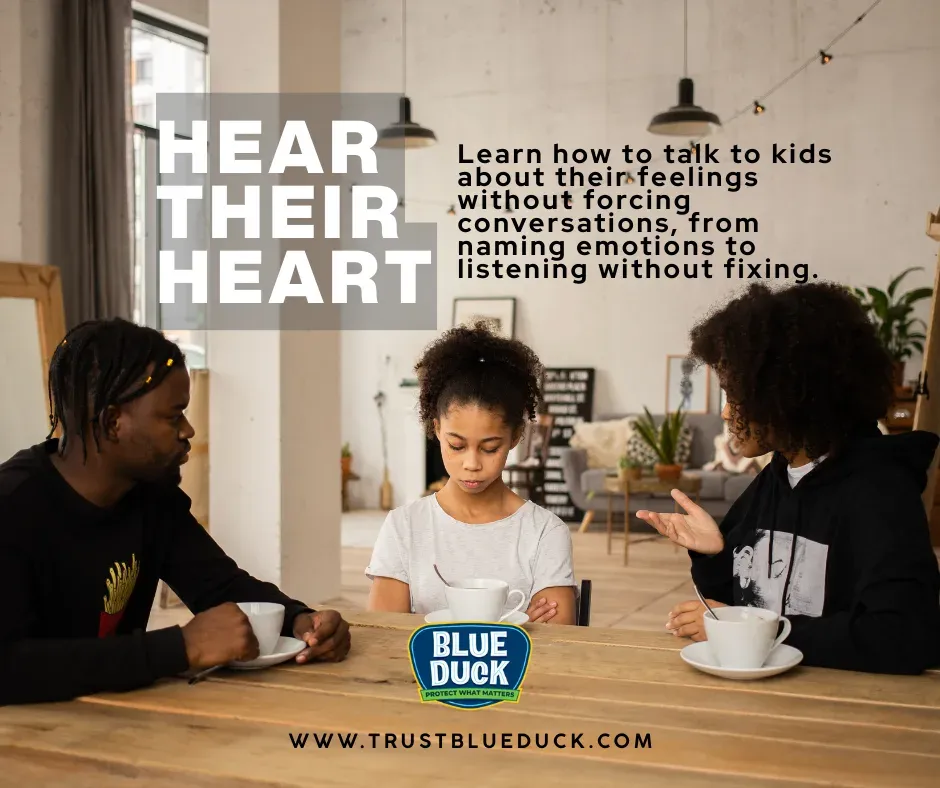
Your child comes home quiet and withdrawn. Something happened at school, but they won't say what. You want to help, but every question gets a shrug or "I don't know." Forcing conversation rarely works. Neither does ignoring the silence. So you're left wondering: how to talk to kids about their feelings when they'd rather slam a door than share a single word? The answer isn't a script. It's a shift in how you show up.
Start With Your Own Feelings
Children learn emotional vocabulary by watching you. Name your feelings out loud. "I'm feeling frustrated right now because traffic was terrible." "I'm happy today because we get to spend time together." This normalizes emotions as everyday experiences rather than big scary events. When you model emotional honesty, you give your child permission to do the same.
Try Side-by-Side Conversations
Face-to-face talks feel intense for many children. Try talking while doing something else. Driving in the car. Walking the dog. Cooking together. Washing dishes. Side-by-side conversations feel less threatening and often produce more honest sharing. Your child doesn't feel put on the spot. That's the trick: when you stop chasing the conversation, it often comes to you.
Listen Without Fixing
When your child finally shares something hard, resist the urge to solve it. Jumping in with advice shuts down conversation. Instead, reflect back what you hear. "That sounds really hard." "It makes sense you felt that way." Validation keeps the door open. Solutions can come later, if your child asks for them. Often, they just need to be heard.
Use Books and Stories
Stories offer a safe way to explore emotions. Read books about characters dealing with anger, sadness, or fear. Pause and ask questions. "How do you think she felt?" "Has that ever happened to you?" Stories create distance that makes talking easier. They give children language for experiences they haven't yet named.
Respect the Silence
Sometimes your child won't want to talk. That's okay. Let them know you're available whenever they're ready. "I'm here if you want to talk later." Then drop it. Pushing creates resistance. Patience creates trust. If you've ever wondered how to talk to kids about their feelings when they refuse to open up, this is your answer. Sometimes the best move is simply waiting nearby.
Keep Showing Up
Emotional conversations don't follow schedules. They happen in unexpected moments, often when you least expect them. Stay available. Stay curious. Stay calm. Your consistent presence teaches your child that feelings are welcome, not dangerous. That they can bring their whole selves to you, even the messy parts. Nobody learns how to talk to kids about their feelings in a single conversation. It's built slowly, through small moments of trust repeated over years. Not perfect conversations, but a relationship where conversations can happen. And that relationship is built one small moment at a time.
