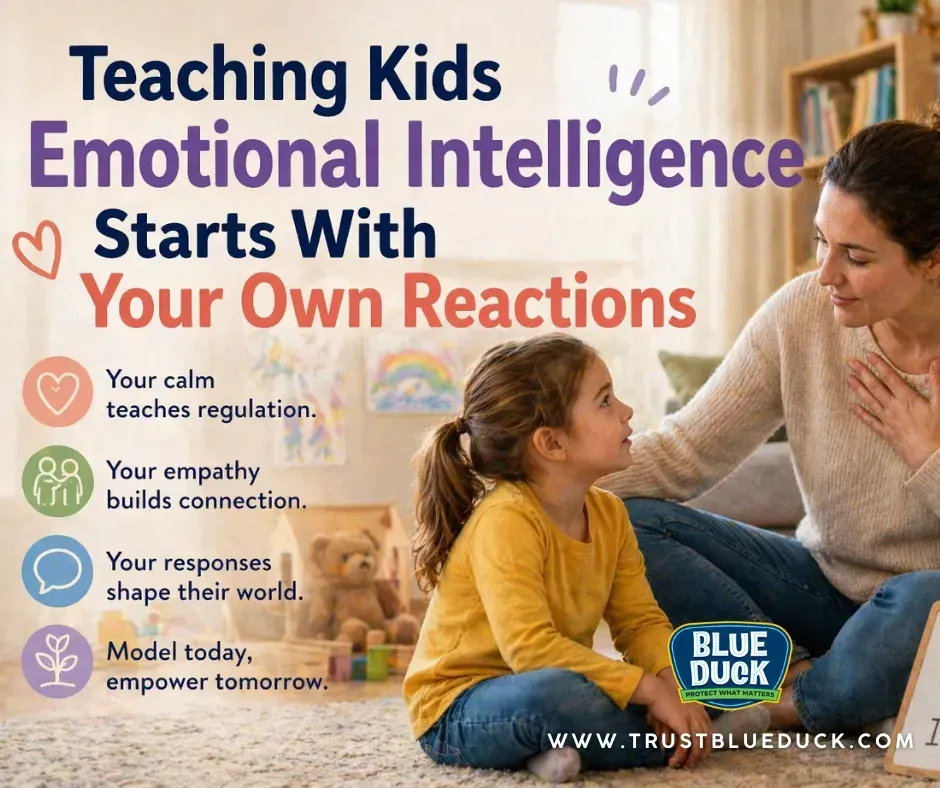
Teaching Kids Emotional Intelligence Starts With Your Own Reactions
Your child melts down over a broken cracker, and your first instinct is to fix it or shut it down. Yet something deeper is happening beneath that crumbling snack. They're learning about feelings from you in real time. Intentionally teaching kids emotional intelligence doesn't require workbooks or special curricula. It requires showing up differently during the hard moments, the ones already happening in your living room today.
Name It Without Shaming It
When big emotions explode, resist minimizing or dismissing. Become a translator instead. "You're feeling really angry that your tower fell down." Naming feelings validates your child's experience without endorsing the behavior. Consequently, children build vocabulary for their internal worlds, and named feelings lose some of their overwhelming power.
All Feelings Are Welcome, Not All Behaviors
Feelings themselves never need punishment. Anger belongs. Jealousy belongs. Frustration belongs. However, hitting, screaming, or throwing things requires limits. "You can be angry at your brother. You cannot hit him." This approach teaches emotional acceptance while maintaining behavioral boundaries.
Model Your Own Emotional Process
Your children watch how you handle frustration. Do you yell at traffic? Slam cabinets? Or do you name what's happening? "I'm feeling really frustrated right now. I'm going to take three breaths." Narrating your internal process gives children permission to do the same. You don't need to be perfect, just honest.
Problem Solve Together Afterwards
After the storm passes, revisit what happened. "Your tower fell and you got really upset. What could we try next time?" Brainstorm solutions without judgment. This collaborative approach builds coping skills. Additionally, children feel respected as partners in their own growth.
Read Books About Feelings
Stories offer safe distance for exploring big emotions. Pause during reading to ask questions. "Have you ever felt that way?" "What do you think she should do?" Libraries overflow with excellent options for every age. These conversations happen naturally over picture books.
Validate Before You Teach
When your child shares a feeling, resist jumping straight to problem solving. "I see you're sad that playdate got canceled. That really stinks." That's it. Often children need validation before they can hear solutions. Leading with empathy opens their ears for whatever comes next.
Use Everyday Opportunities
Waiting in line becomes frustration tolerance practice. Losing a board game becomes disappointment rehearsal. Emotional intelligence develops through ordinary moments, not special lessons. Point out these opportunities casually. "That was hard waiting so long. You did a good job being patient."
The Long Game
You won't see results immediately. Learning any skill involves messy practice. Trust the process. Over years, those tiny daily interactions accumulate into something remarkable. A child who can name their feelings, tolerate disappointment, and repair after conflict.
What Your Efforts Create
Consistently teaching kids emotional intelligence produces children who know feelings have names and names have power. Children who understand that anger doesn't make them bad, sadness doesn't last forever, and asking for help shows strength. That's the inheritance worth passing down. Not perfection, but emotional literacy. Your work today matters more than you'll ever fully know.
