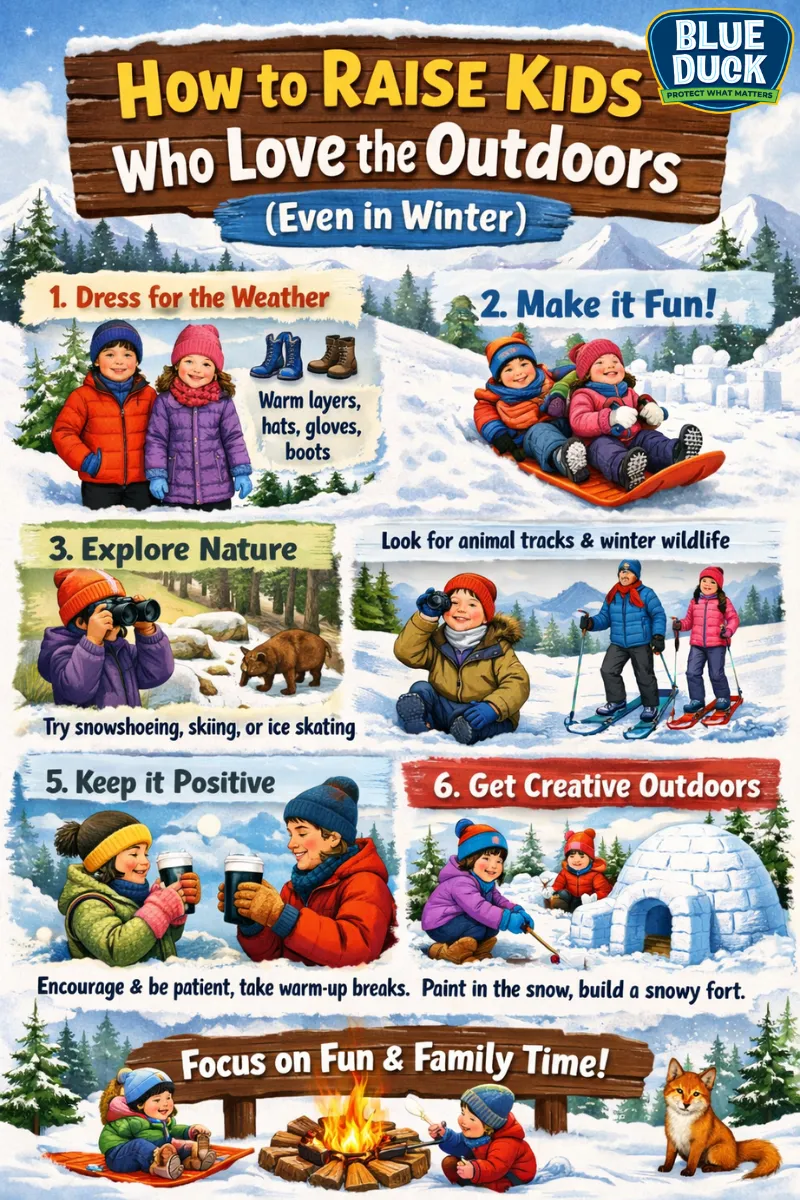
How to Raise Kids Who Love the Outdoors (Even in Winter)
Many parents want their children to spend more time outside. Fresh air helps kids move, explore, and reset after long school days. But winter in Indiana can make outdoor time feel harder. Cold mornings and early sunsets often push families indoors.
Still, it is possible to raise kids who love the outdoors in every season. The secret is not perfect weather. The secret is simple habits that make outdoor time normal.
Children who grow up outside build confidence. They stay active. They learn to enjoy nature even when the temperature drops.
Why Kids Who Love the Outdoors Thrive Year-Round
Parents often notice a change after kids spend time outside. Energy levels improve. Focus gets better. Mood shifts in a positive direction.
Encouraging kids who love the outdoors helps children develop healthy routines.
Benefits for Kids Who Love the Outdoors
• Stronger physical health
• Better focus after school
• Less screen time
• More curiosity about nature
Outdoor play also builds independence. Kids learn to explore, solve problems, and interact with the world around them.
Start Small to Raise Kids Who Love the Outdoors
Parents do not need a long hiking trip to create outdoor habits. Small daily moments work just as well.
Children build interest when outdoor time becomes routine.
Simple Ways to Encourage Kids Who Love the Outdoors
• Take a short walk after dinner
• Play catch in the backyard
• Ride bikes around the neighborhood
• Visit a nearby park once a week
Consistency matters more than duration. Ten minutes outside every day builds the habit.
Winter Can Still Create Kids Who Love the Outdoors
Cold weather does not need to stop outdoor fun. Indiana winters offer their own type of adventure.
Kids often enjoy winter activities when they dress properly and keep moving.
Winter Activities for Kids Who Love the Outdoors
• Build snow forts
• Go sledding at a local hill
• Take winter nature walks
• Make snow art with food coloring spray
Parents often find that winter play becomes a favorite family memory.
Outdoor time also burns energy. Kids return inside happier and calmer.
Make the Backyard a Place for Kids Who Love the Outdoors
Backyards play an important role in outdoor habits. Kids go outside more when the space feels comfortable.
A safe and inviting yard encourages spontaneous play.
Backyard Ideas for Kids Who Love the Outdoors
• Add simple lawn games
• Create a small nature corner
• Keep sports equipment nearby
• Use outdoor lighting for early evenings
Some families also manage pests to keep the yard comfortable. Services like Blue Duck Pest Control help reduce mosquitoes so children can enjoy outdoor time during warmer months.
Parents Set the Example for Kids Who Love the Outdoors
Children watch what parents do. They follow the habits they see.
When adults choose outdoor activities, kids often join without hesitation.
Ways Parents Encourage Kids Who Love the Outdoors
• Go for family walks
• Plan weekend park visits
• Garden together in spring
• Explore new trails in local parks
These moments create lasting memories. They also show children that outdoor life is part of everyday living.
Final Thoughts
Children do not need perfect weather to enjoy the outdoors. They need encouragement and opportunity.
Raising kids who love the outdoors starts with simple family habits. Walks around the block matter. Backyard games matter. Even winter snow days can become outdoor adventures.
These experiences shape childhood. They create curiosity, confidence, and joy.
And sometimes the best family memories start with stepping outside the front door.
